
Pool Equipment
Signs Your Pool Pump May Need Repair
A pump often gives warning before it stops completely. Recognizing changes in sound, flow, temperature, and leakage can prevent a small problem from becoming an emergency.
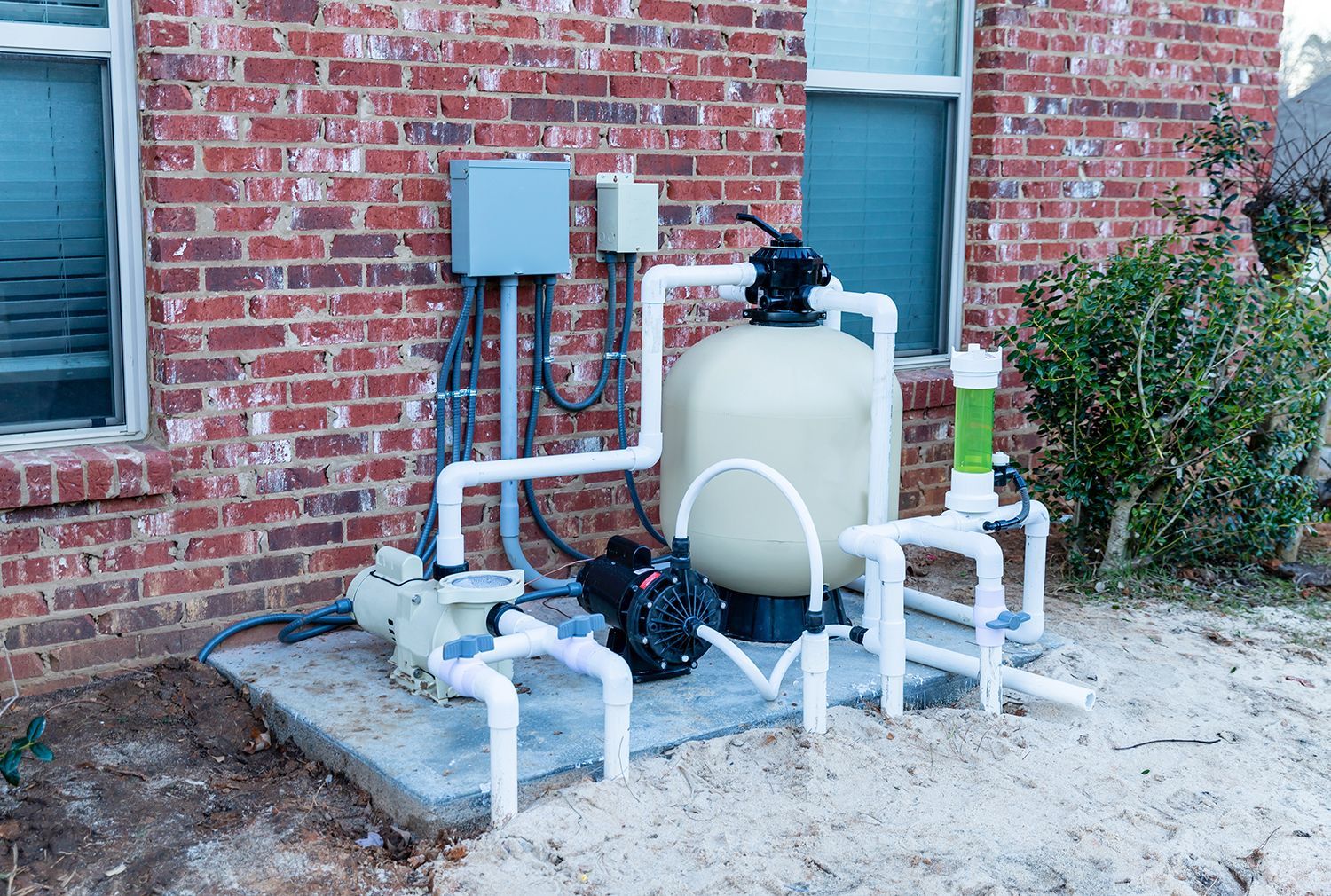
The pool pump keeps water moving through the skimmers, filter, heater, sanitizer, and return lines. When it loses performance, the water may become cloudy or difficult to balance even if chemicals are being added correctly. Some pump problems are simple—such as a full basket or a lid seal that needs attention—while others require professional pool equipment repair.
New or unusually loud noise
A pump should have a consistent operating sound. Grinding, screeching, rattling, buzzing, or a high-pitched whine deserves attention. Noise can be related to bearings, vibration, debris in the impeller, restricted flow, cavitation, or a motor that cannot start properly. Turn the system off if the sound is severe or accompanied by smoke, a burning odor, or overheating.
Water leaking around the pump
Small drips should not be ignored. Water beneath the equipment may come from a loose fitting, lid O-ring, drain plug, housing, or shaft seal. A failed shaft seal can allow water to reach the motor and turn an inexpensive seal repair into a larger motor or pump replacement.
Air in the pump basket or return lines
A few bubbles after startup may clear quickly, but persistent air can signal a low pool level, a damaged lid seal, a loose suction-side fitting, a clogged skimmer, or another air leak. The pump basket should normally fill with water during operation. If it repeatedly loses prime, the system needs diagnosis.
Weak flow or rising filter pressure
Weak return flow can begin with something as simple as a full basket or dirty filter. It can also point to a blocked impeller, closed valve, suction obstruction, air leak, worn pump, or plumbing problem. Filter pressure helps narrow the cause: unusually high pressure often suggests restriction after the pump, while unusually low pressure may suggest inadequate water reaching the pump or an impeller issue.
Frequent shutdowns or electrical problems
A pump that trips a breaker, stops after heating up, hums without starting, or will not maintain its programmed speed should be checked promptly. Do not repeatedly reset a tripping breaker. The problem may involve the motor, drive, capacitor, wiring, voltage, bonding, or another electrical condition that requires a qualified professional.
Before scheduling a repair
- Confirm the pool water is high enough for the skimmer.
- Turn off the pump and clean accessible skimmer and pump baskets.
- Check whether a valve was recently moved.
- Record the filter pressure and any error code.
- Take a short video of the noise or startup behavior.
- Note whether the problem occurs at every speed or only at certain times.
Repair or replace?
Age alone does not decide. A serviceable seal, O-ring, fitting, or obstruction may justify a repair. A severely corroded housing, failed motor on an older single-speed unit, obsolete parts, repeated failures, or high energy use may make replacement more sensible. A proper recommendation should compare the full repair cost, remaining equipment life, compatibility, warranty, and operating efficiency.
Is your pool pump acting differently?
Schedule an equipment evaluation before weak circulation affects water quality or a leak damages the motor.
Request Pump Service